An autoclave data logger travels inside the chamber, through the full sterilisation cycle, and records exactly what the load experienced. It is the core tool of autoclave validation and routine requalification. Here is how to choose the right one and use it well.
What makes a logger suitable for an autoclave?
Steam sterilisation is harsh: saturated steam, rapid pressure changes and temperatures typically of 121 °C or 134 °C. A suitable autoclave logger must be:
- Sealed and submersible — steam and condensate must not reach the electronics.
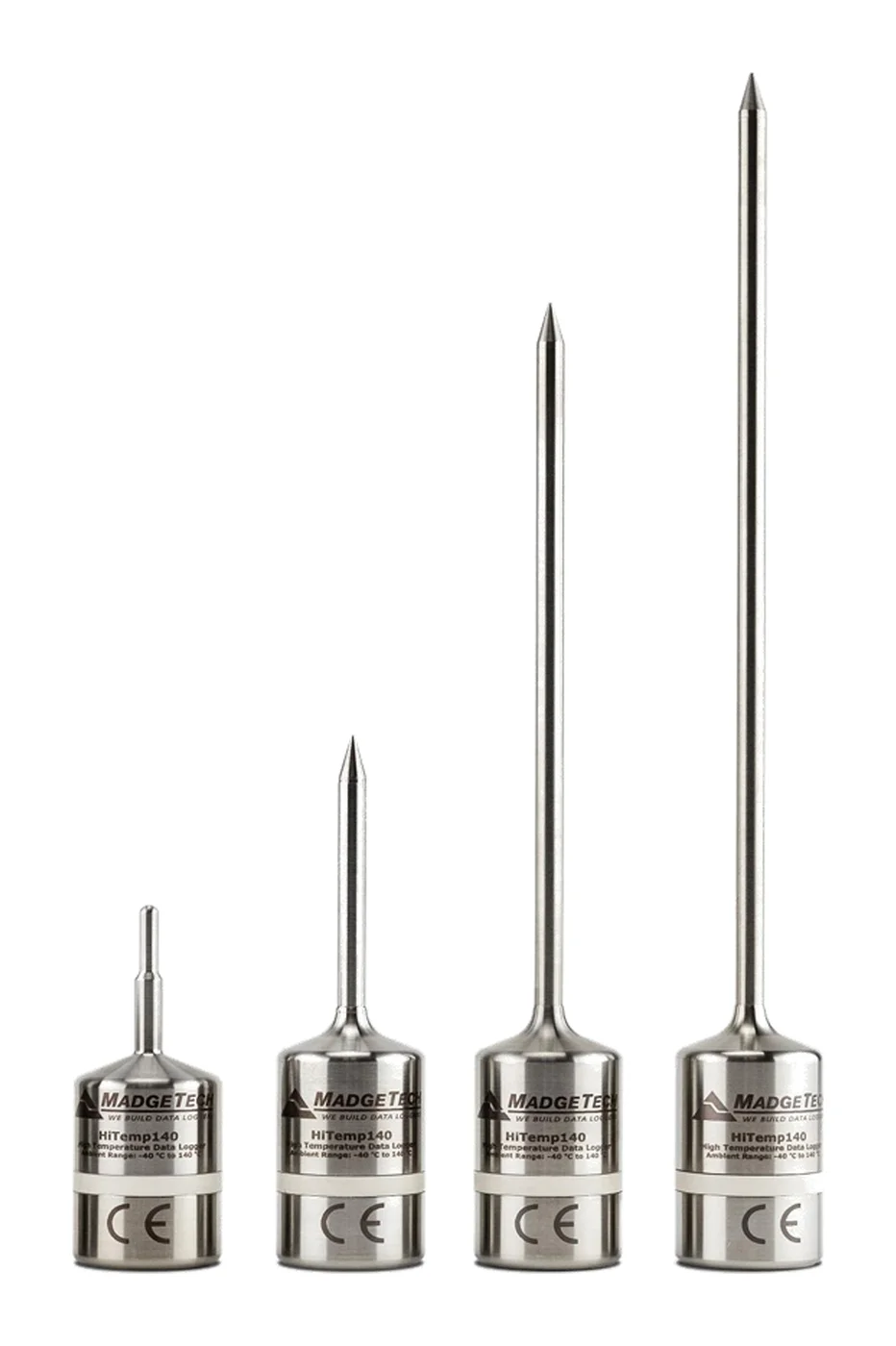
- Rated beyond your cycle temperature — the HiTemp140 covers -40 °C to +140 °C.
- Accurate where it matters — at the sterilisation temperature, not only at room temperature.
- Supplied with a calibration certificate — MadgeTech's HiTemp140 ships with an ISO 17025 accredited certificate.
- Available with the right probe — rigid probes of different lengths reach into containers, packs and liquids.
Temperature only, or temperature and pressure?
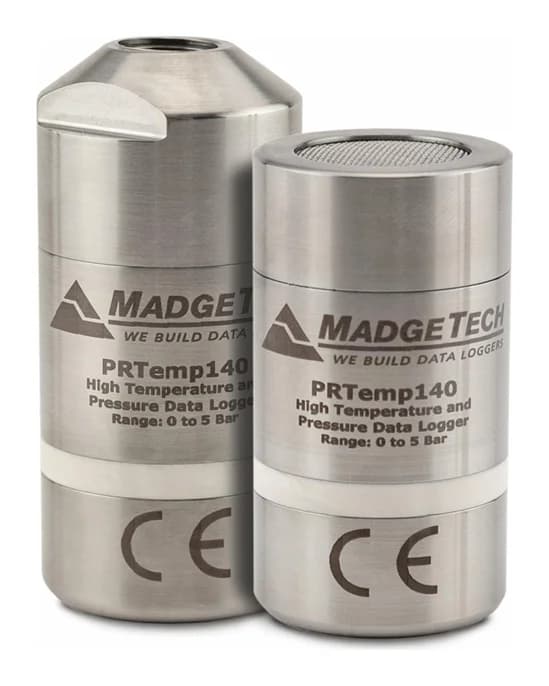
For steam sterilisers, pressure data is valuable evidence. Because saturated steam has a fixed pressure–temperature relationship, logging both confirms that the chamber was filled with steam, not an air–steam mixture. The PRTemp140 records temperature and pressure in one 2.5-inch logger, and the AVS140-6 set includes a dedicated PR140 pressure logger.
How many loggers do you need?
It depends on chamber volume, load complexity and the standard you work to (for example ISO 17665 for moist heat sterilisation of health care products). As a practical starting point:
- Several loggers spread across the empty chamber for heat distribution, including near the drain — often the coldest point.
- Loggers inside the load for heat penetration, in the hardest-to-heat items.
- One pressure logger per cycle.
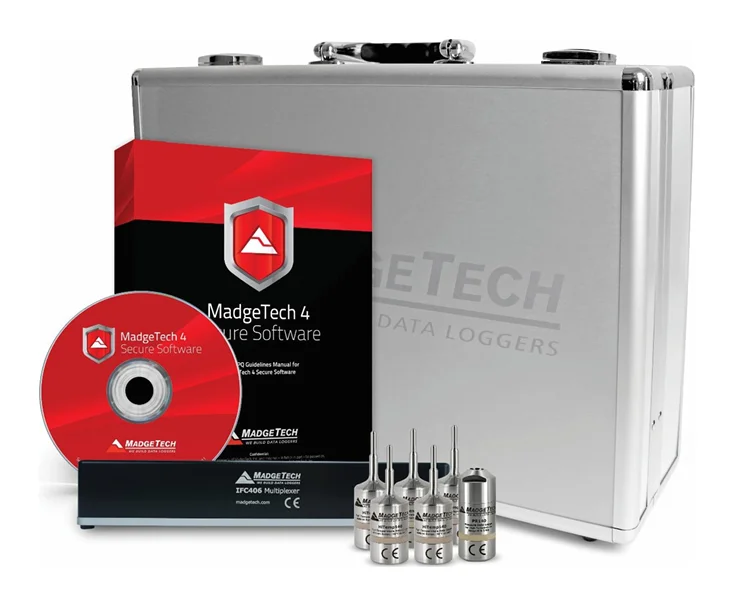
That's why validation kits bundle multiple loggers: the AVS140-6 provides five HiTemp140 temperature loggers plus a pressure logger.
Placement tips
- Map the empty chamber first to find the slowest-heating location.
- Place penetration loggers inside the densest packs, bottles with the largest volume, or porous loads.
- Use probes long enough to reach the geometric centre of liquid containers.
- Record positions with a sketch or photo — auditors will ask.
F0 and lethality
Validation reports usually express sterilisation effectiveness as F0 — the equivalent time at 121.1 °C, calculated from the temperature record. MadgeTech software can calculate lethality values from logger data, which saves manual spreadsheet work.
Real-time or download later?
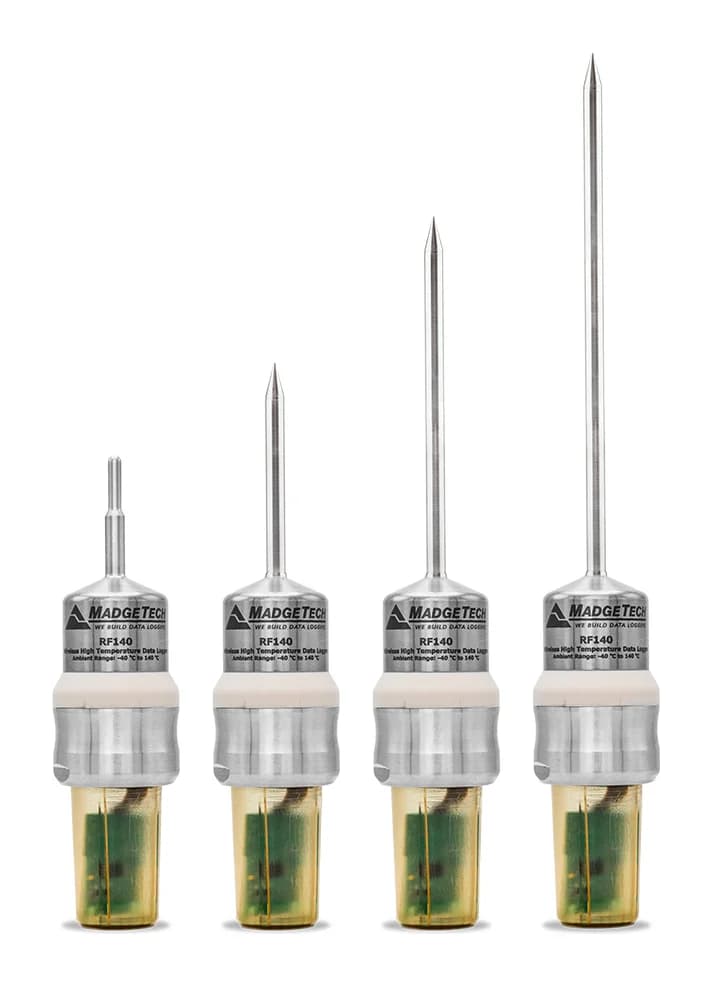
Standard loggers are downloaded after the cycle. If you want to watch a cycle live — for troubleshooting or long processes — the Bluetooth RF140 sends readings in real time.
Frequently asked questions
Can any temperature logger be used in an autoclave?
No. An autoclave logger must survive saturated steam, pressure and temperatures up to about 140 °C while staying sealed. Use a submersible high temperature logger designed for sterilisation, such as the MadgeTech HiTemp140.
Why measure pressure as well as temperature?
In a steam autoclave, pressure and temperature are linked. Logging both confirms the chamber held saturated steam — not just hot air — during the sterilisation hold.
This guide is part of our
Autoclave Validation